Can the processes employed in creating art be influenced and guided by mycology?
Seeing the world through the lens of fungi is through the lens of symbiosis. The primary lesson that fungi teach is that all life is interconnected, and as the world's grand connectors, decomposers, and resource distributors, mycelial networks demonstrate the universal principle of mutual aid. By taking influence from, and promoting the shared knowledge of the fungal kingdom, artists can be provided with innovative tools that open avenues of transformative, community-centred, and dialogical approaches that encourage wider societal, cultural, and environmental advancements to respond to a litany of growing complex challenges. These changes, however, can only be implemented through a wider understanding and shift towards symbiotic relationships.
Mycology is a branch of biological science which has been described as a holistic discipline, spanning “microbiology, physiology, land management, agriculture, forestry, ecology, economy and climate change” (Sheldrake, M. p.42). Art and science frequently go hand-in-hand with each other. It is the creative thinker and problem solver who sees the world full of potential. The artist and scientist both pioneer new technologies and uses for materials through creative experiments - without limits on what can or should be done, the artist tries what could be imagined or thrown together, constantly allowing for advancement, whether tried and tested or by chance.
Mycology is frequently described as a 'rabbit-hole' of information. Once you start to find an interest it only deepens as one starts to see the limitless potential of fungi. By promoting discussion and communication through the use of fungi as a catalyst for change, there can be wider discussions about many of the problems that plague modern day society. Fungi can be harnessed to influence communication and sharing of resources through efficient systems of connection. Food scarcity issues can be addressed by high-protein and nutrient rich mushrooms that can easily be grown at home. Intensive agricultural practices that threaten soil health can be renewed with mycorrhizal fungi. Environmental solutions are currently being developed to the break down plastics and waste, or to create sustainable building and packaging materials for commercial use.
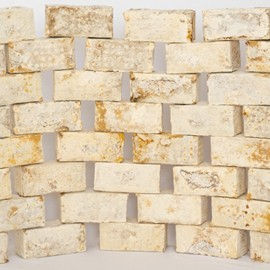

Left: Myco Bricks, made from mycelium and agricultural waste. Right: Mycelium based packaging.
Celebrated Mycologist and Author of ‘Entangled Life’ Merlin Sheldrake, summarises this by describing fungi as “veteran survivors of ecological disruption” while posing the question “Might it be we can’t adjust to life on a damaged planet without cultivating new fungal relationships?” (Sheldrake, M. p.196).
It is often said that the Contemporary Artist’s role is to critique the issues of modern culture - nowadays specifically in the context of populist rhetoric such as capitalism and consumerism, inequality and injustice. This is achieved through the means of visual representation that spark discussion not usually communicated through mainstream media, often a documentation of the intricacies and paradoxes of culture. The artist creates a piece of work that an audience reacts to viscerally or bodily. The viewer then takes a metaphorical piece of the art home with them, digests it, and turns it into new thought, like fungi reconstruction of organic matter. Fungi, therefore, offer the Contemporary Artist a valuable resource, providing examples of solutions to be communicated as acts of political and social activism, promoting growth and positive change. Like the hyphae that keep the soil together, the creative gives a raw and unfiltered view into the realities of the world, helping to bind humanity together through community and expression.
Fungi are, by their very nature, decomposers “found performing 90% of all decomposition on Earth” (McCoy, P. p.53), essential in breaking down materials and nutrients to be harnessed elsewhere. They produce acids which can break down rock, radioactive materials - such as seen in Chernobyl - and whatever they manage to evolve to decompose. This is essential to help break down the unsustainable amount of waste produced globally that is destroying our world and ecosystems.
The contemporary artist can take influence from this catalytic influence by considering how they can break down traditional ideas and thinking, conceptually and practically, testing new processes while figuring out what works best for the whole. This is reflected by artists such as Janis Ridley who, while describing her sculptural process, states her intentions as a way to find more than she already knows: “I use flow, adding and destruction. I have to feel I can break it down again… And so often the thing that’s really good sometimes has to come off, because it’s not fitting with the whole, so I’m going for wholeness.” (Ridley, J.) By looking at her practice as an organic process that requires constant redefining and development, Ridley manages to reflect fungi’s transformative role.
Because of fungi’s decomposing nature, they can be associated with death and are often seen in western culture as disgusting, dirty and dangerous, posing a challenge for the artist to consider the subjective nature of art, which could sway the viewer away from the intended discourse. Many people have preconceived notions that fungi, alongside bacteria and viruses, should be eliminated for cleanliness and good health, despite more modern science proving the opposite is true . We rely on fungi for the healthy upkeep of our bodies and ecosystems. “They are inside and around you. They sustain you and all that you depend on.” (Sheldrake, M. p3)
The fungal kingdom is still largely unknown and undiscovered, and because there is much to learn from fungi, it makes sense to open many dialogues around the subject. To get the gears turning for as many people as possible to start to see the potential of thinking like fungi. While there is a lot of potential for plant-based biomaterials already being harnessed, fungi is a much less funded and understudied area, which means the potential is still expanding with each new exploration and discovery. (See Appendices, 1.)
The use of psychedelics by artists has been well documented over the years - the tortured artist rhetoric frequently leads to drug abuse, depression, and other mental disorders. Psychoactive substances found in certain mushrooms alter the neural pathways in the brain, triggering new synaptic responses that help to alter old habits and thought patterns, but the successful Contemporary Artist also triggers new synaptic responses by offering alternate perspectives and shattering worldviews.
The concept of opening the mind to wider experiences can be appealing, yet not without its dangers. While often spiritual, the mind-altering effects of psychoactive mushrooms can be seen as beneficial to one’s sense of belonging to a larger whole. While therefore important to touch upon, it is the effects of dialogical discussion and community-based connection that transform the ‘enlightened’ individual into an active member of wider society.
It is important to understand that an artwork can only provide conceptual context and does not hold the power to create large-scale societal changes without deeper communal commitment. The message must trigger a curiosity and emotional connection that sticks with the viewer, but without real ways of applying these concepts, change cannot be implemented on a larger scale by a single audience member. Hence why a dialogical approach should be implemented.
Grant H. Kester's ‘Conversation Pieces’ (2004) highlights artists who specifically use dialogical and community-based artworks, describing ““context providers” rather than “content providers”” (Kester, G. p.1), in which “conversation becomes an integral part of the work itself” (Kester, G. p.8), offering a movement away from the modernist art culture that focused on self-reflection and towards complex contemporary issues, “based on the assumption that the world of art should challenge or disrupt the viewers expectations about a given image, object, or system of meaning… to overcome his or her habitual forms of perception.”(Kester, G. p.17) In this sense fungi can offer influence as, in the words of Peter McCoy, “Once the mycelial thought is learned, it is impossible for it to not influence all of one’s activities.” (McCoy, P. p.381).
Describing Kant’s philosophy, Kester states that “pleasure that is produced by an aesthetic encounter … reassures us that we are all, essentially, rational individuals, capable of reaching political agreement by virtue of our common cognitive experience of the world. Aesthetic reflection evokes a utopian future community in which the collective experience validates our most personal and intuitive responses to the world around us. Further, it presupposes that a public sphere, based on the free and open exchange of ideas, will produce an eventual consensus because individuals are able to overcome self-interest and judge from the vantage point of a greater good.” (Kester, G. p.28). By understanding this idealistic viewpoint, we can start to understand the potential for fungi to provide the context of collaboration and community to move towards more sustainable societal structures.
The 'Radical Mycology' movement, coined by McCoy and explored in his book by the same name (2016), further expands on fungi as a catalyst for change. McCoy believes that “Fungi act as central agents in all cycles of life, and it is time that they begin to form a central role in all aspects of human life” (McCoy, P. p.XX), while discussing that “the benefits of integrating fungal cultivation into daily life can enhance the design of one’s home and town in ways that are more supportive of the culture and environment at large” (McCoy, P. p.XV). From taking back the means of food production to inciting community based collaboration, “the Radical Mycology perspective presents means to thoroughly integrate the habits of fungi into one’s way of being”(McCoy, P. p.XIX), engaging the reader to “build new intersections in their community”(McCoy, P. p.XX) and to illicit fungi to help to break down the western mycophobia that plagues us while promoting wider societal changes influenced by the study of mycology. (See Appendices, 2.)
These ideas are reflected by contemporary artists paving the way in scientific collaboration, who argue that “In a posthuman or post-anthropocentric worldview, we still retain our subjective point of view, but find it decentred and appropriated by new forms of community. We can no longer consider ourselves to be individual, but a collective of human, fungal, bacterial and viral agents that make us who we are.” (Rapp, R. 2019) Theresa Schubert who “in her installations or site-specific interventions … often works with living organisms, who she considers equally as co-workers and collaborators. Schubert critically reflects the world around her through the context of Anthropocene” (Rapp, R. 2019) allowing refreshing perspectives in a world of destruction and technological automation. Similarly, Saša Spačal’s describes her MyConnect project as “a symbiotic interspecies connector that questions anthropocentric division of nature-human-technology” (Spačal, S. 2013) which allows us to further the interconnectedness of our physical being in relation to the natural fungal and technological worlds.

Saša Spačal’s immersive sensory MyConnect experience
In the wake of the destructive nature of the anthropocentric point of view, we can also look at the environmental impacts of creating art and how using mycomaterials can help to address some of these issues. In my own work I am drawn to organic, experimental techniques that come from using fungi as a medium. There is a reduction of my impact on the environment as I am no longer using plastic based materials - fungi thrive on organic substrates, and part of my process is to document their ability to thrive on unlikely materials, promoting a direct reconnection to nature and an incentive to think in more environmentally friendly terms.
I strongly believe that in the future we will be relying heavily on fungi to advance and develop resilient models within all areas of society. By considering fungi as a catalyst for change, collaboration and connection between disciplines the Contemporary Artist can help to challenge reductionist scientific mindsets while offering brand new perspectives with which to view the world. By opening dialogical modes of communication influenced by the many potential applications of fungi, we open the possibility to harness new environmentally, anthropologically, medicinally and scientifically important advancements. As McCoy suggests; “To spawn the next generation of Radical Mycologists, our system should actively seek to inspire and educate all those that encounter them.” (McCoy, P. p.29).
By recognising that artistic processes are synonymous with Mycology, we can draw parallels that offer inspiration and guidance that integrate these principles into an artistic practice that aligns with a rapidly changing world.
Reference List:
-
Sheldrake, M. (2020) Entangled Life: How Fungi Make Our Worlds, Change Our Minds, and Shape Our futures. Penguin, Random House, UK.
-
Sheldrake, M. (2020) Entangled Life: How Fungi Make Our Worlds, Change Our Minds, and Shape Our futures. Penguin, Random House, UK.
-
McCoy, Peter, et al. (2016) Radical Mycology: A Treatise On Seeing & Working With Fungi Chthaeus Pess, Portland, US.
-
Ridley, J. (Date Unknown) Video 1, Janis Ridley Profile/statement. http://www.janisridleysculpture.com/profile.aspx (Accessed 01/05/2025)
-
Sheldrake, M. (2020) Entangled Life: How Fungi Make Our Worlds, Change Our Minds, and Shape Our futures. Penguin, Random House, UK.
-
Grant H. Kester. (2004) Conversation Pieces: Community + Communication in Modern Art. University of California Press, California, US.
-
Grant H. Kester. (2004) Conversation Pieces: Community + Communication in Modern Art. University of California Press, California, US.
-
Grant H. Kester. (2004) Conversation Pieces: Community + Communication in Modern Art. University of California Press, California, US.
-
McCoy, Peter, et al. (2016) Radical Mycology: A Treatise On Seeing & Working With Fungi Chthaeus Pess, Portland, US.
-
Grant H. Kester. (2004) Conversation Pieces: Community + Communication in Modern Art. University of California Press, California, US.
-
McCoy, Peter, et al. (2016) Radical Mycology: A Treatise On Seeing & Working With Fungi Chthaeus Pess, Portland, US.
-
McCoy, Peter, et al. (2016) Radical Mycology: A Treatise On Seeing & Working With Fungi Chthaeus Pess, Portland, US.
-
McCoy, Peter, et al. (2016) Radical Mycology: A Treatise On Seeing & Working With Fungi Chthaeus Pess, Portland, US.
-
McCoy, Peter, et al. (2016) Radical Mycology: A Treatise On Seeing & Working With Fungi Chthaeus Pess, Portland, US.
-
Rapp, R. (2019) On mycohuman performances: fungi in current artistic research. Springer Nature Link https://link.springer.com/article/10.1186/s40694-019-0085-6 (Accessed: 18/04/25)
-
Rapp, R. (2019) On mycohuman performances: fungi in current artistic research. Springer Nature Link https://link.springer.com/article/10.1186/s40694-019-0085-6 (Accessed: 18/04/25)
-
Agapea Saša Spačal. (2013) Myconnect. https://www.agapea.si/en/projects/myconnect (Accessed: 18/04/25)
-
McCoy, Peter, et al. (2016) Radical Mycology: A Treatise On Seeing & Working With Fungi Chthaeus Pess, Portland, US.
Bibliography:
Agapea Saša Spačal. (2013) Myconnect. https://www.agapea.si/en/projects/myconnect (Accessed: 18/04/25)
Kester, G.H. (2004) Conversation Pieces: Community + Communication in Modern Art. University of California Press, California, US.
McCoy, Peter, et al. (2016) Radical Mycology: A Treatise On Seeing & Working With Fungi Chthaeus Pess, Portland, US.
Rapp, R. (2019) On mycohuman performances: fungi in current artistic research. Springer Nature Link https://link.springer.com/article/10.1186/s40694-019-0085-6 (Accessed: 18/04/25)
Sheldrake, M. (2020) Entangled Life: How Fungi Make Our Worlds, Change Our Minds, and Shape Our futures. Penguin, Random House, UK.
Appendices:
-
There are of course, dangers that come with promoting fungi. There are toxic and psychoactive compounds in some species. This doesn't mean they should be met with the vitriol that western culture dictates. “Of the estimated 150,000 mushroom-forming fungi in the world, only around 400 are thought to be toxic” (McCoy, P. p.88), and only if ingested. Touching mushrooms poses no threat, and is far less dangerous than touching plants. Consuming psychoactive substances can be mentally destructive for those with a predisposed nature to illnesses such as schizophrenia, or through abuse, but modern medicine is now learning how to harness these active substances to treat major depressive disorders and PTSD, so with the right controls and legislation can be used safely. This does then raise the question of whether pharmaceutical companies should be able to monopolise a healing substance that mother nature provides us in abundance and that has been used throughout history in spiritual and shamanic rituals.
-
McCoy understands that fungi can be explored as a medium by anybody with a curiosity in nature, and a little patience. Experiments can be performed at home thanks to his meticulously documented instructions or alternatively thanks the wide availability of mycological resources and equipment available via the internet, which itself draws similarities to a mycorrhizal network, coining the term ‘The Wood-Wide Web’. McCoy also stresses the importance of moving away from a reductionist scientific mindset, promoting interdisciplinary research and practices, stating that “reductionism can justify actions that imply human superiority over the rest of the world – an anthropocentricism in which exploitation of the environment can be interpreted as a necessary act” (McCoy, P. pXVIII). Sheldrake agrees, emphasizing that “Cognitive science emerged from the study of humans and so naturally placed the human mind at the centre of its enquiry… But how we define intelligence and cognition is a question of taste. For many, the brain centric view is too limited.” (Sheldrake, M. p73). Sheldrake encourages us to stop looking at the natural world through the lens of humans as if we are what every living organism should be measured against.